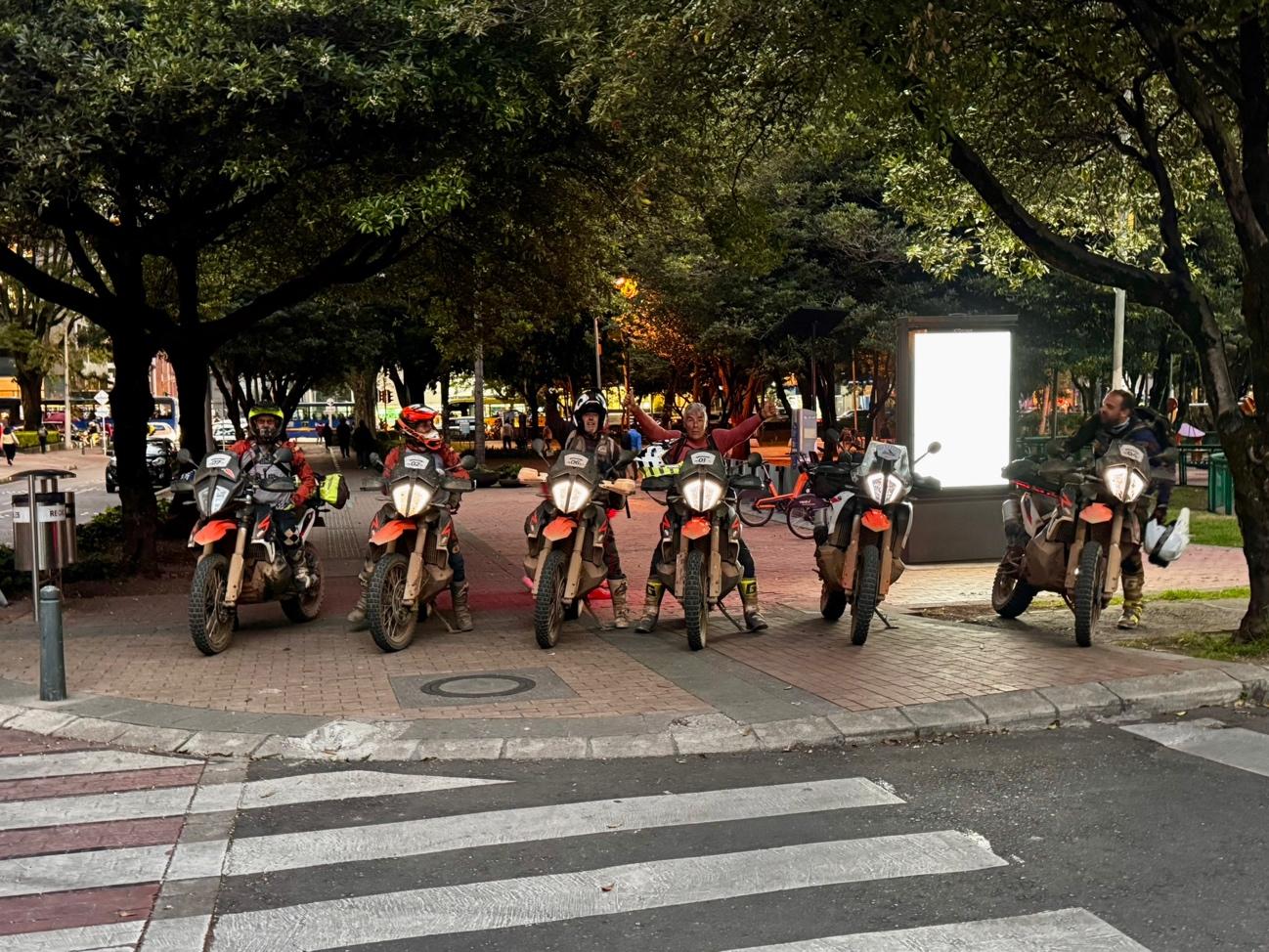


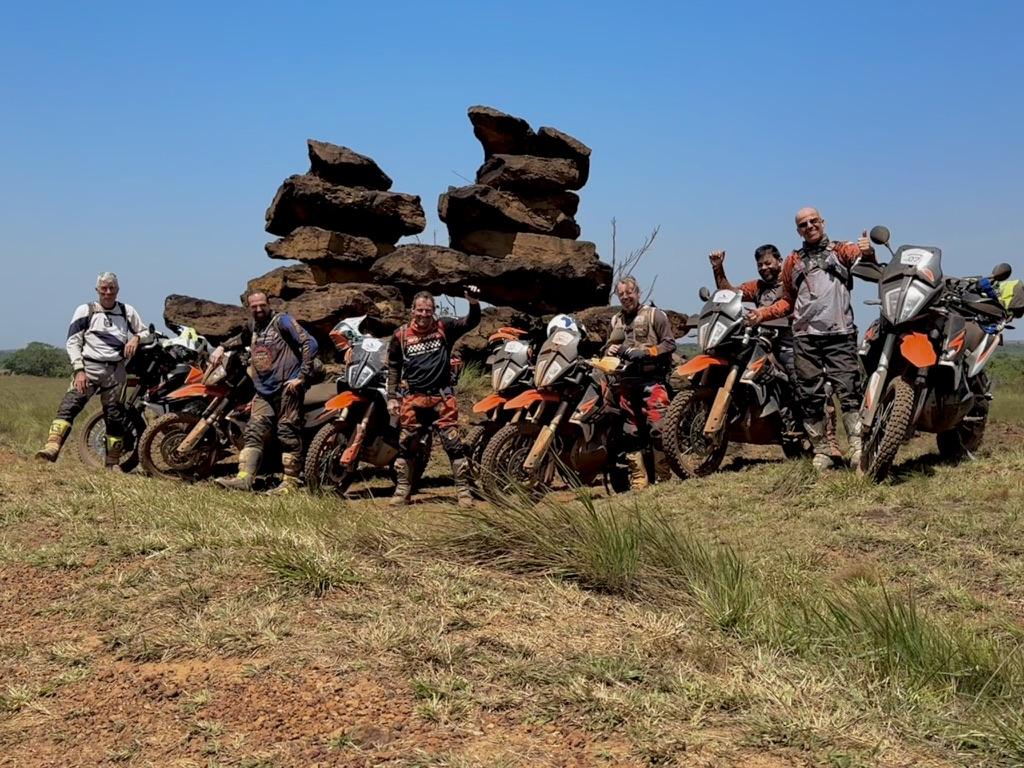
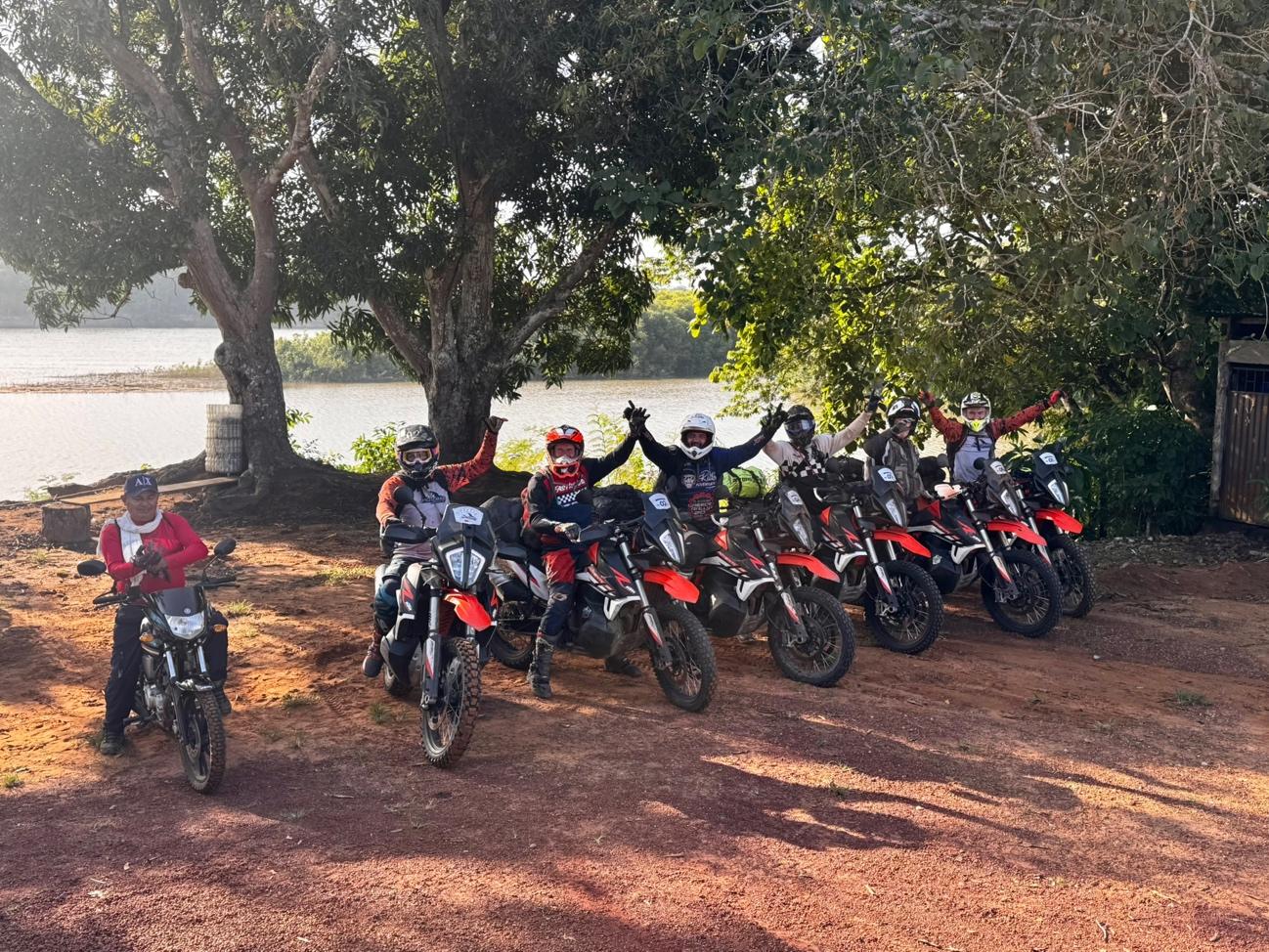
At the beginning of this year, we had the privilege of embarking on a new edition of our adventure deep into Vichada — one of Colombia's most remote and unexplored regions. This demanding and spectacular journey would be shared with a group of international adventurers: Eric —our first contact for this expedition— along with Jan, Dirk, and Bob from the Netherlands, and Nick from England. Providing essential mechanical support was our trusted partner John Téllez, always ready for any challenge.
As is tradition, we welcomed everyone at the airport. That same evening, we dove into Colombian culture with a vibrant dinner at Andrés Carne de Res. A place where flavor, music, and irreverence combine into an unforgettable welcome: every kind of grilled meat imaginable, local beer, and an energetic atmosphere that perfectly set the stage for what was to come.
Day 1 — Bogotá: culture, history, and first steps
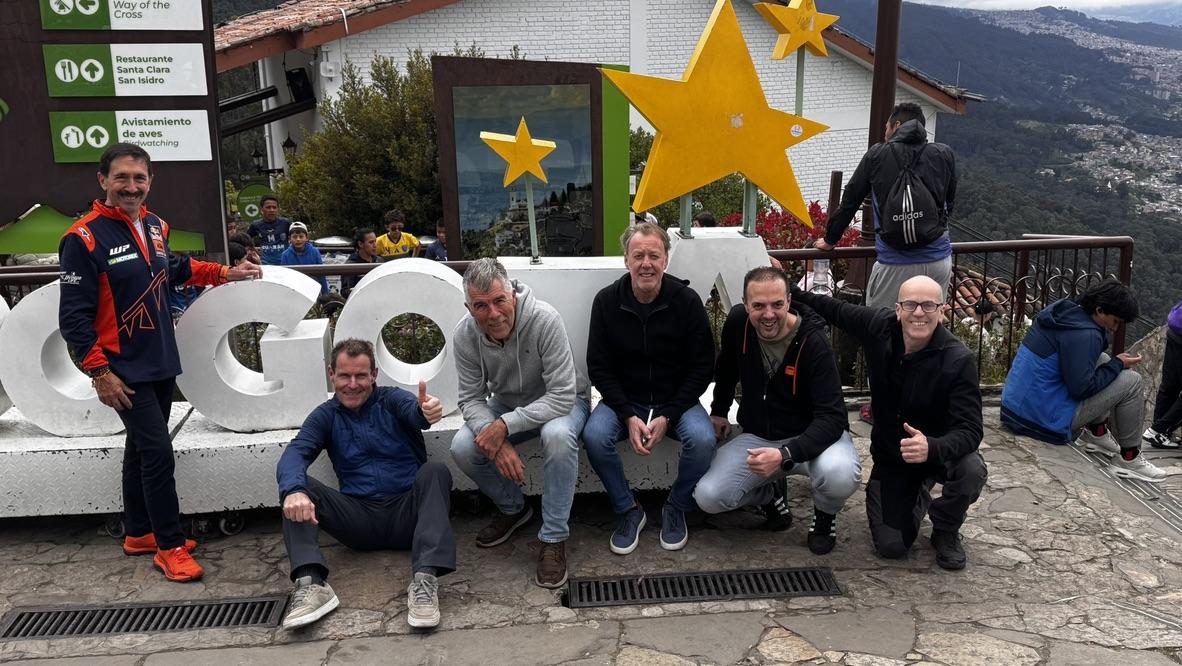
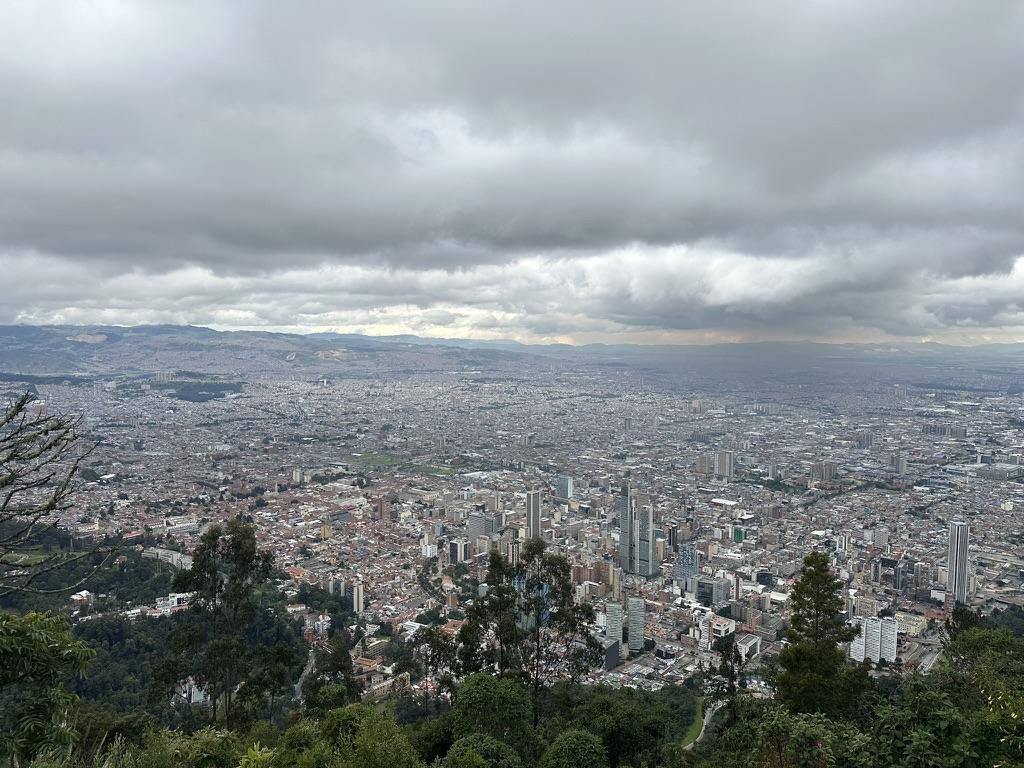
Our first day was dedicated to exploring the heart of Bogotá. We walked through the historic Plaza de Bolívar, visited several museums, sampled local cuisine, and, of course, ascended Monserrate, the city’s iconic lookout. No matter how many times you visit, the view from the top never fails to impress — especially for those setting foot in the Andes for the very first time. A day to tune into the diversity and contrasts of Colombia.
Day 2 — Heading to the Plains: from pavement to savanna
Early the next morning, we departed north across the plateau. The road was in excellent condition — newly paved stretches and perfect tunnels offered a visually striking drive. The transitions through tropical vegetation felt like moving through entirely different worlds, and as a special treat, the majestic Chivor Reservoir appeared between the mountains like a glassy giant.
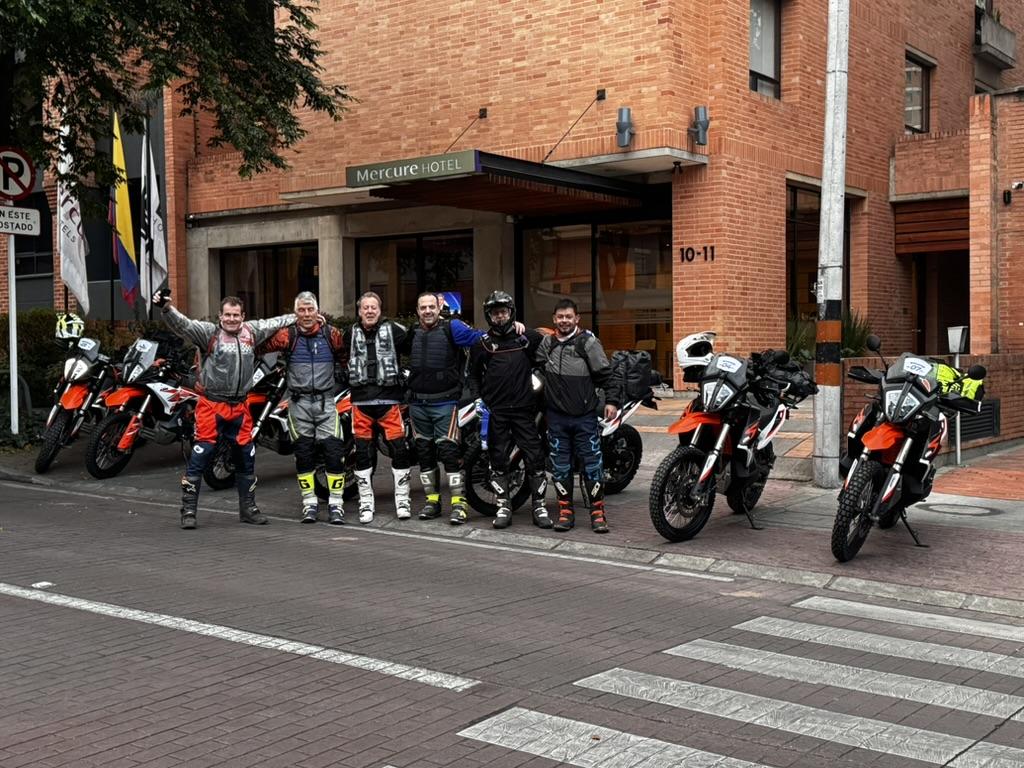
We stopped for lunch in Yopal, where we were served the region’s signature dish: llanero-style grilled beef, cooked slowly over open flames. With the group now fully immersed in the atmosphere of the plains, we continued on to Trinidad, in the heart of Casanare, where we made our final stop before heading into the most remote section of the journey.
Day 3 — The Off-Road Begins: the real challenge starts
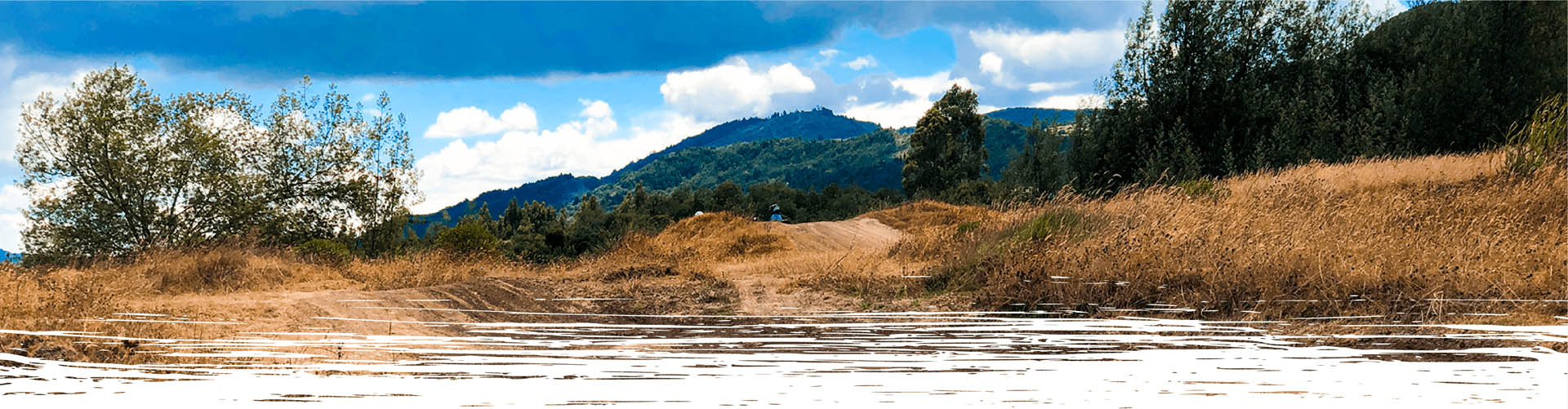
We started early, ready for what everyone had been anticipating: the off-road. We entered the first of approximately 1,800 kilometers of pure off-road adventure. The dust, water crossings, loose dirt, and heat quickly became our new companions.
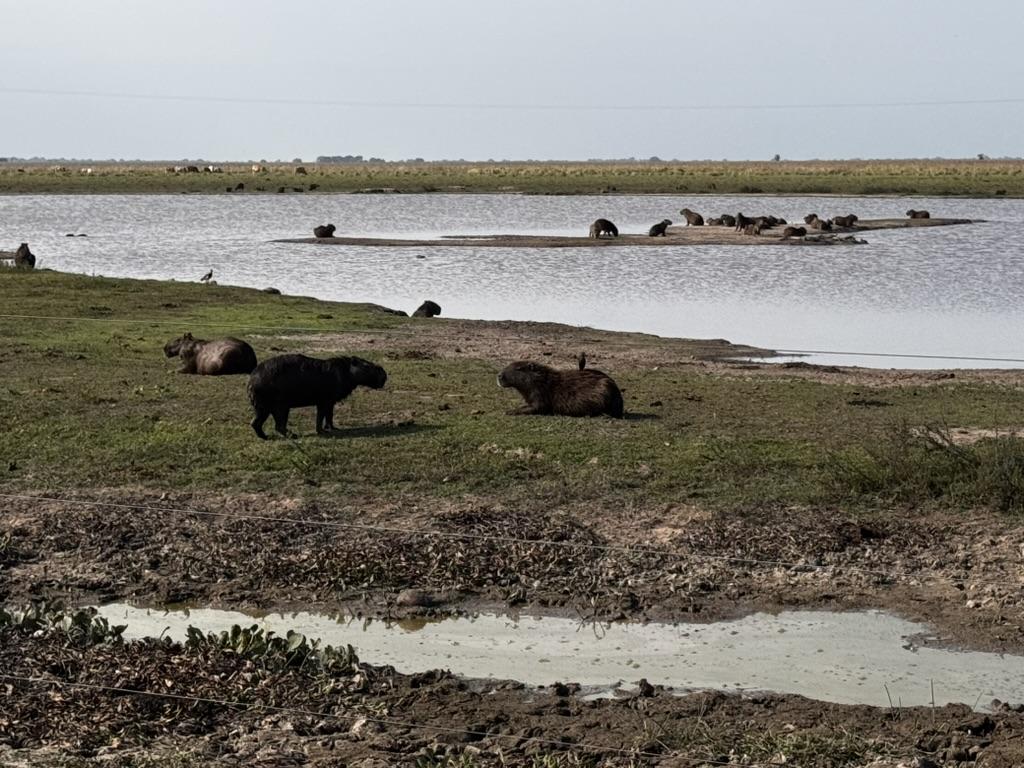
Early into the ride, nature offered us a picture-perfect scene: a group of capybaras cooling off in a pond next to grazing cattle — an authentic snapshot of the Llanos.
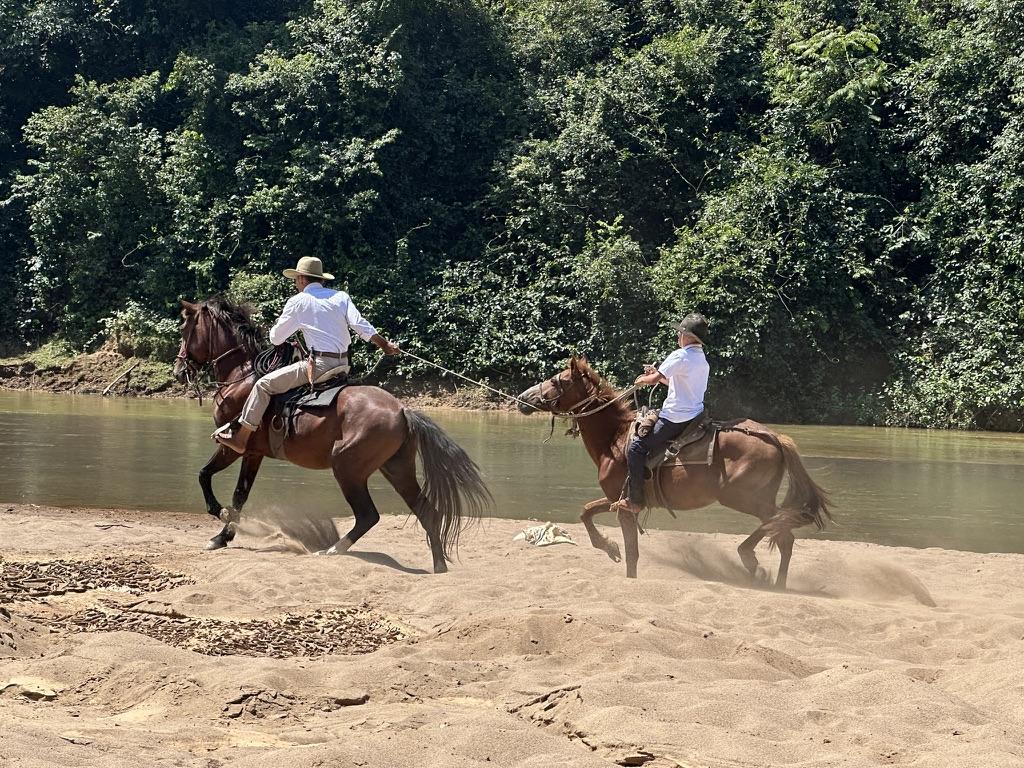
Later, we arrived at a very special stop: Doña Célida and her family had prepared a true llanero experience. Lunch was delicious, full of new flavors for our foreign guests, who bravely tried everything. After the meal, young locals performed traditional music and dances, and as a grand finale, a young boy and his grandfather demonstrated wild horse taming — a powerful moment for everyone.
With time running short, we continued toward the Meta River, determined to cross by ferry before sunset. The route challenged us with loose dirt and stretches of soft sand just before reaching the water. On the other side, La Primavera welcomed us with its characteristic heat — and thankfully, air conditioning to end a long day.
Day 4 — Deeper into Vichada
We started early once again, heading further into the unexplored heart of Vichada, into terrain even unfamiliar to our regular guide. But at La Primavera, we were joined by a special reinforcement: Professor Humberto, a true llanero who knows these plains like the back of his hand.
Under his guidance, we traveled across endless red landscapes, coated with that fine, sticky dust that clings to you for days. Professor Humberto had already arranged lunch right along the route: authentic llanero cooking, impossible to forget for any visitor.
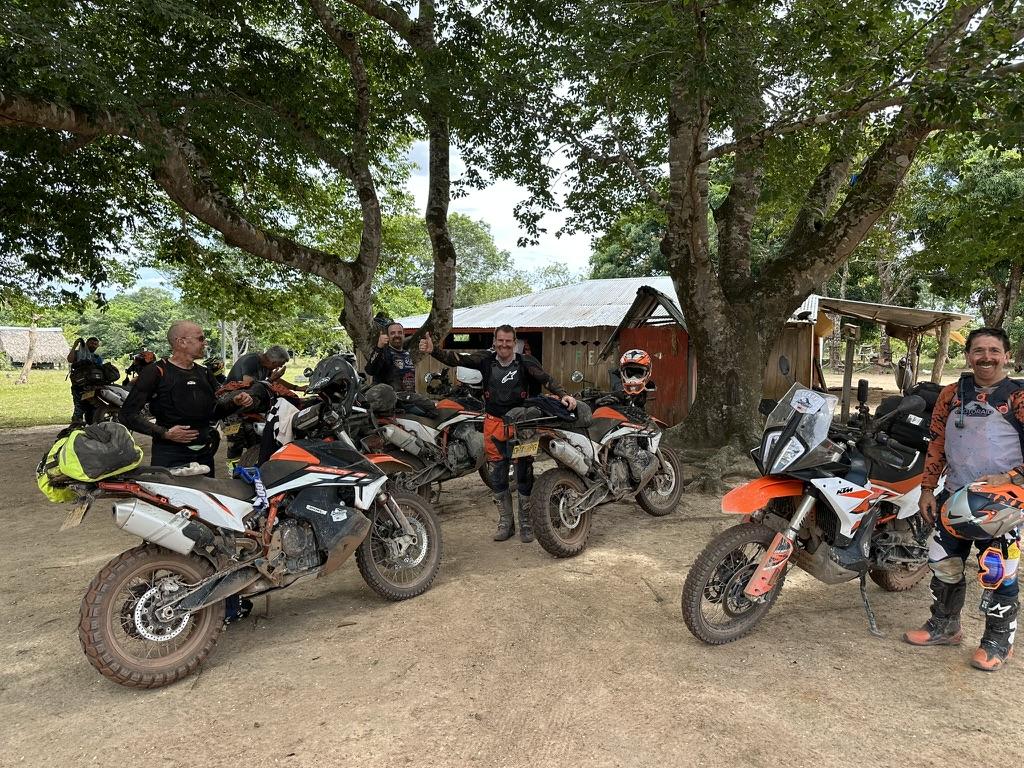
The afternoon brought wide-open plains, perfect for opening the throttle. But adventure always comes with risk. A small mistake, and Eric went down unexpectedly. When John and I arrived, Nick was already assisting him. Although bruised and sore, Eric gradually regained his breath. After giving him a painkiller, it was clear he couldn’t continue riding. His good friend Bob took him as a passenger for the rest of the day.
We reorganized the plan: John and Professor Humberto took over the extra motorcycles while the group continued forward. We reached La Esmeralda just after sunset — where a very special night awaited us.
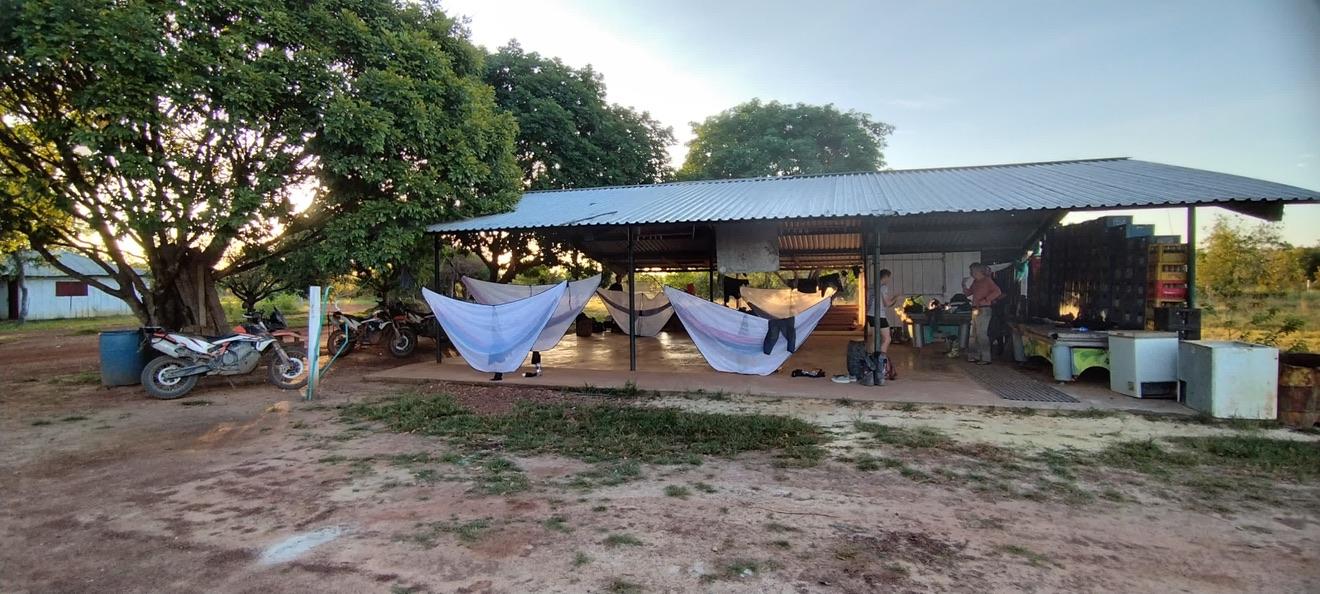
This was one of the surprises: sleeping in hammocks beneath a simple shelter, with basic latrines and improvised bucket showers. For some, it was their first time sleeping in a hammock; for all, an unforgettable experience. Between the initial heat, the cool night breeze, and the sounds of rural life — a few passing cars, neighborhood motorcycles, roosters, and barking dogs — we slept in the very heart of the Colombian countryside. This is how one learns to love rural Colombia: authentic, raw, and full of character.
Day 5 — Crossing the Bita River and a touch of comfort in Puerto Carreño
We woke up to good news: Eric was feeling better. Though still sore, he continued as a passenger on Professor Humberto’s modest but reliable 190cc motorcycle. Meanwhile, John and the Professor drove 80 kilometers back across the plains to recover the remaining motorcycle.
As usual, we stopped to refuel — here, fuel doesn’t come from gas stations but is sold in recycled soda bottles. This sight never failed to amuse our foreign friends.
A couple of hours later, we reached the Bita River for another ferry crossing. Simple, traditional, and charming — a perfect moment to pause and take in the immensity of these landscapes.
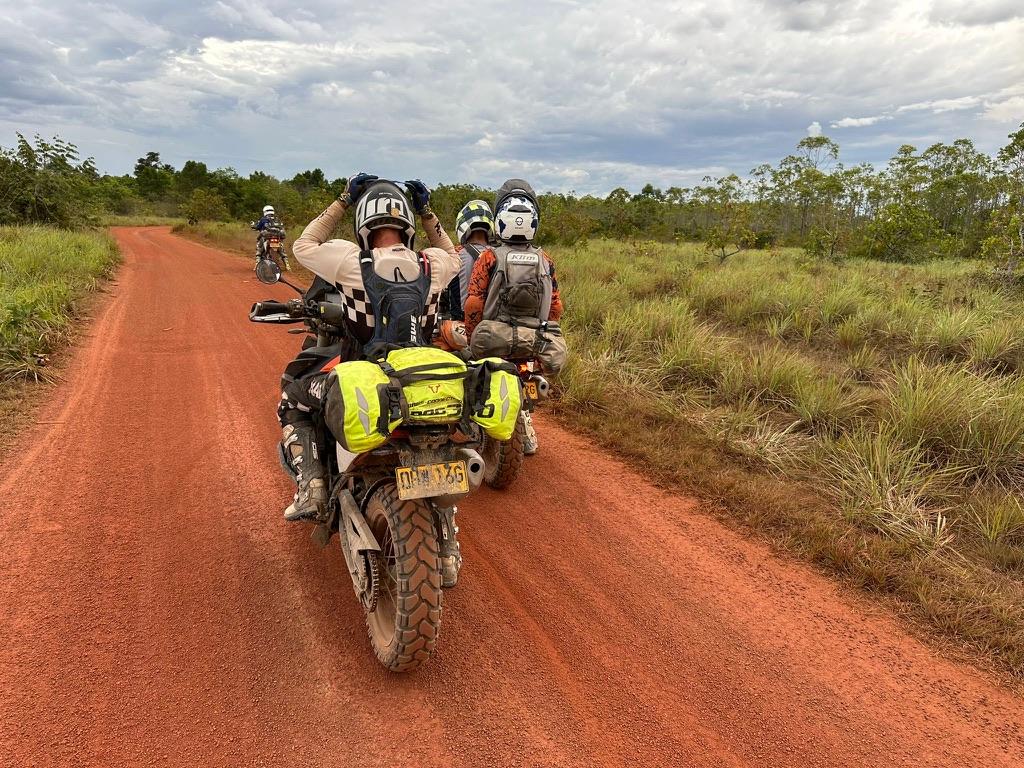
Compared to previous days, this stage was much easier, allowing us to arrive in Puerto Carreño in time for a refreshing shower before a late lunch. Halfway through our journey, the accumulated fatigue was starting to show.
The motorcycles also received first-class treatment: full wash, inspection, and maintenance. And finally, the luxury we all appreciated: two nights in a comfortable hotel with air conditioning, proper beds, and running showers — a true oasis in the middle of the adventure.
Day 6 — Sailing the Orinoco: a recovery day under tropical sun
After several intense days of riding, the body welcomed a change of pace. This day was dedicated to exploring the majestic Orinoco River, one of the world’s most powerful waterways, home to extraordinary biodiversity and centuries of cultural history.
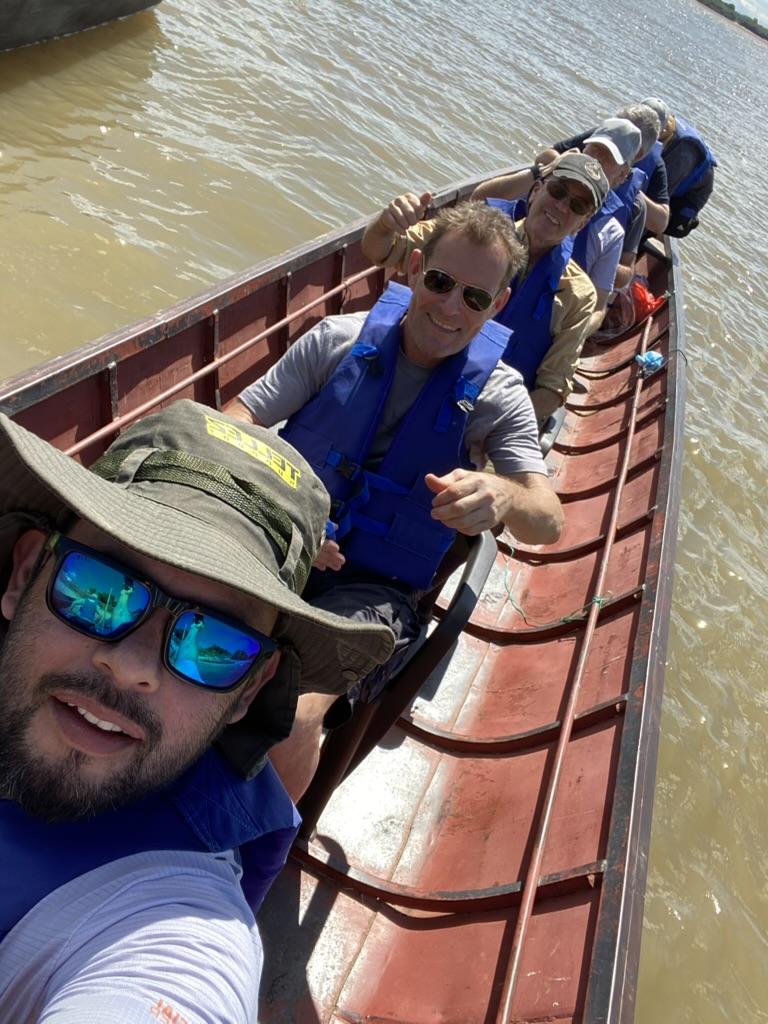
Just a few kilometers from Puerto Carreño, we ventured into a unique spot: the Ventanas Rapids, where massive outcrops of the Guiana Shield emerge — some of the oldest rocks on the planet, their shiny metallic surfaces reflecting like silver or oil.
During the ride, one of our goals was to spot the region’s famous pink river dolphins (toninas). With patience and a bit of luck, we managed to glimpse them surfacing briefly — enough to thrill us like kids.

Of course, we couldn't resist cooling off in the river’s waters, stopping at a massive sandy island — uncertain whether it was Colombian or Venezuelan soil. With cold beers in hand, we enjoyed an unforgettable pause under the tropical sun.
After over four hours of intense heat and sun exposure, we returned to dry land, exhausted from a different kind of challenge this time. The afternoon was reserved for rest, recovery, and another round of maintenance for our faithful motorcycles.
Day 7 — Back to the red dust
Today’s plan was simple: fewer kilometers, but plenty of scenery. A short riding day, rich in images and memories.
A couple of hours from Puerto Carreño, we bid farewell to the Bita River for the last time — it had quietly accompanied much of our journey into the deep Vichada.
Soon after, we crossed Caño Dagua via another small ferry, where, right on schedule, Doña Etelvina had lunch waiting for us — simple, delicious home cooking, served with the warmth and hospitality that define the region.
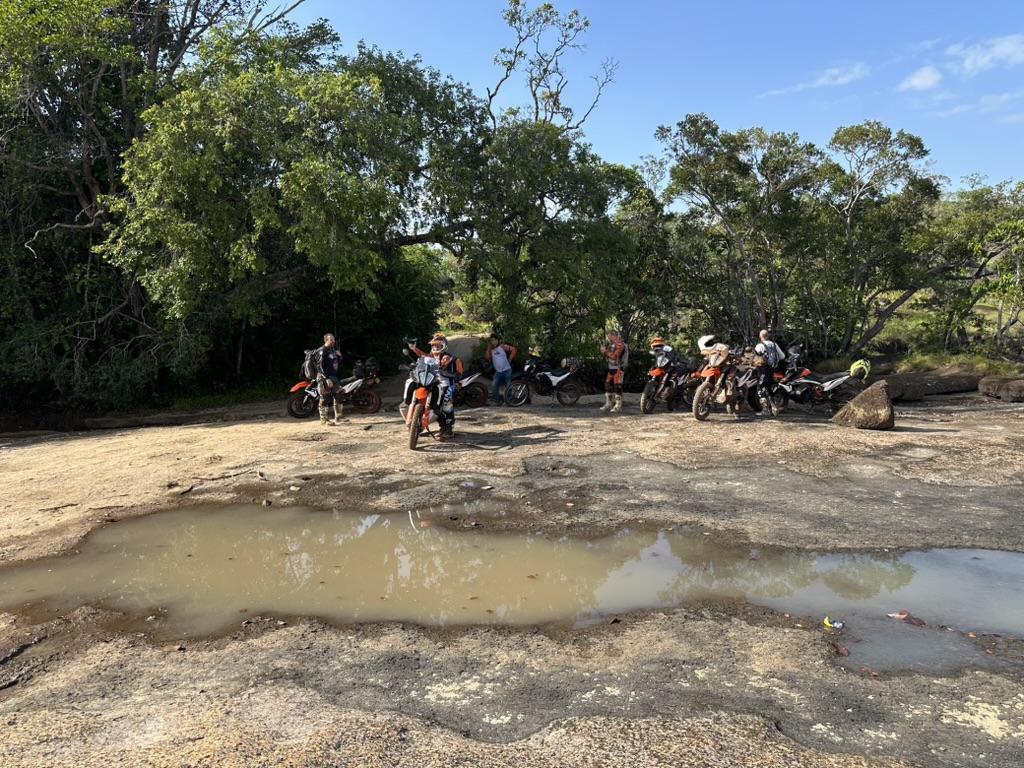
After a pleasant break, we continued to the Mesetas River, another charming ferry crossing surrounded by small waterfalls — another perfect postcard from Colombia’s remote plains.
Pushing forward, we tackled more stretches of loose sand, which by now everyone was handling confidently. By early afternoon, we reached Garcitas, a tiny settlement on the banks of the Orinoco River. Here, Don Alberto and his family welcomed us with rustic cabins ready for our group.
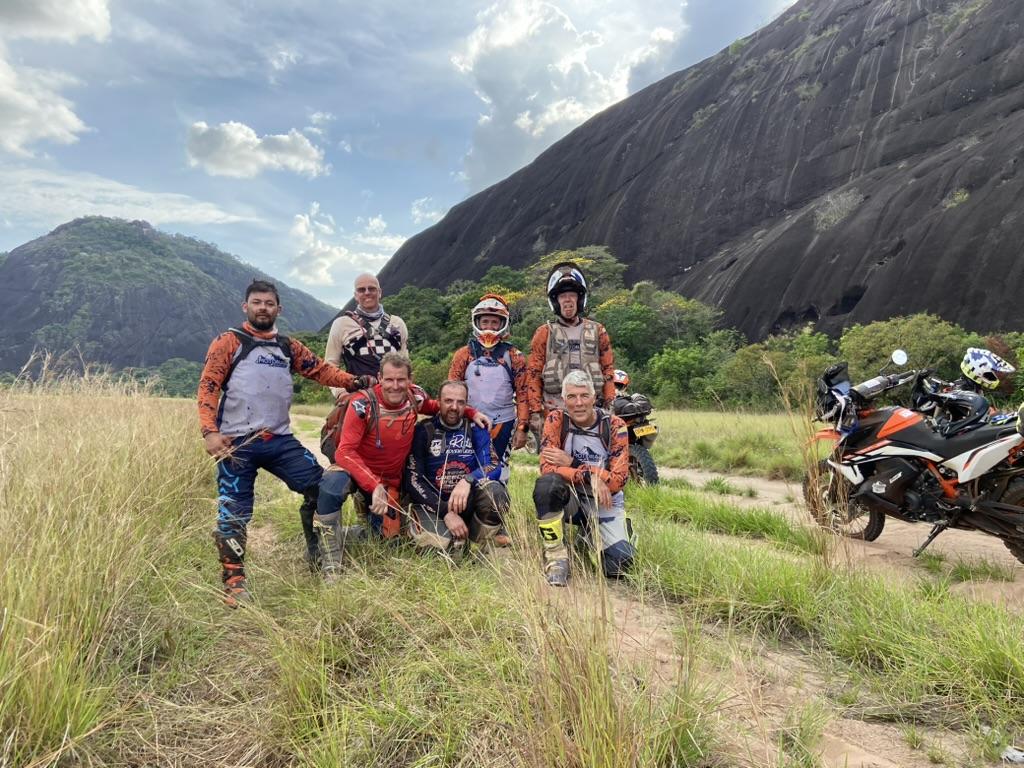
In Garcitas, we reconnected with our friend Wilson, who would captain the boats for our next day’s water crossing. The Orinoco continued to set the rhythm of our adventure.
Day 8 — Sailing with the motorcycles
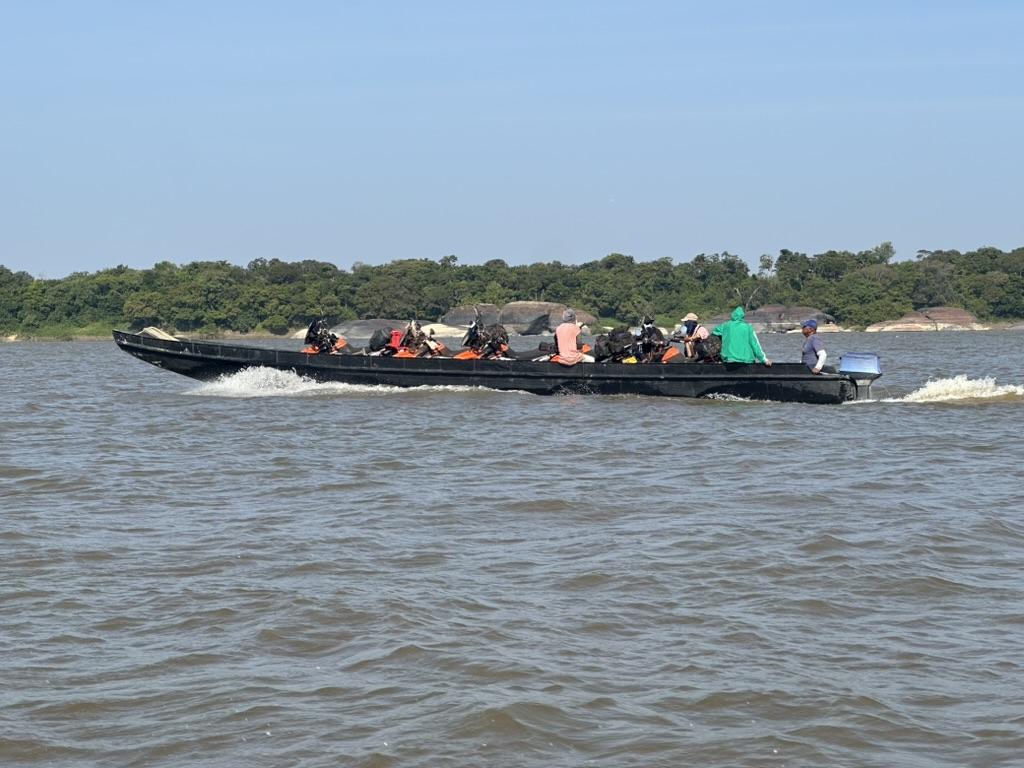
We started early on one of the most anticipated days of the entire trip. After refueling, we carefully loaded each motorcycle onto two long boats that would transport us upriver.
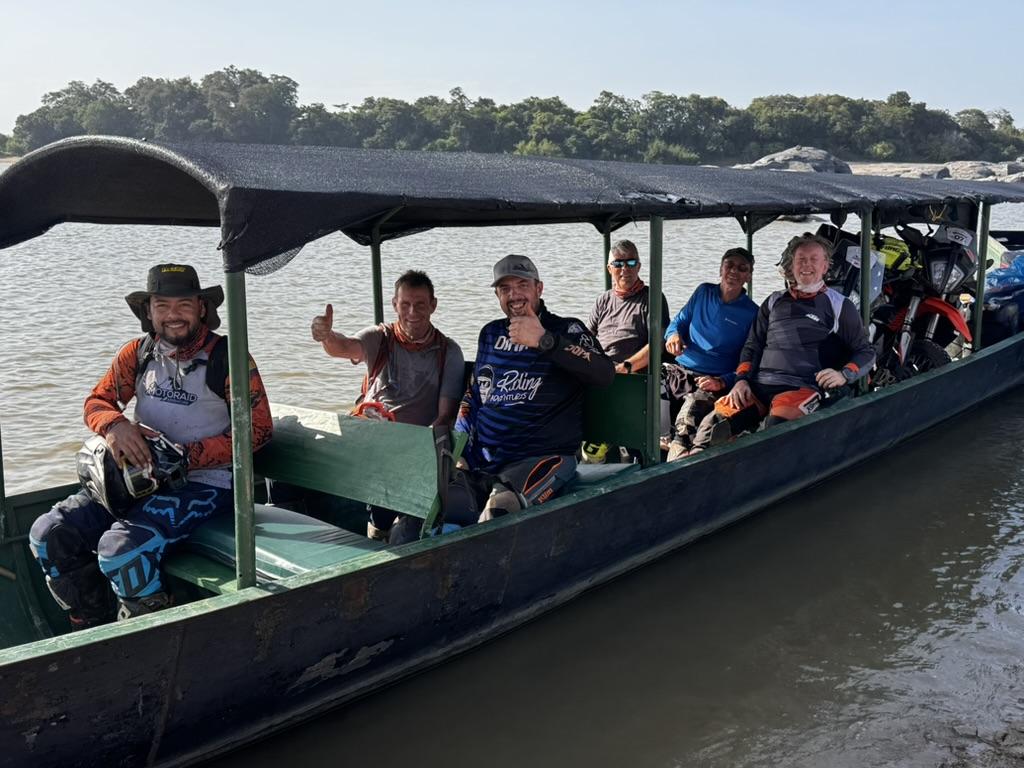
Our friends couldn’t believe what they were experiencing: 40 kilometers of navigation along the Orinoco, two hours of pure contemplation deep in the heart of Vichada. As we approached the Maipures Rapids, where the Tuparro River joins the Orinoco, we had to carefully maneuver through the fast-moving water — a tense moment for everyone on board.
Since motorcycles are not allowed to ride through El Tuparro National Park, we had to cross this protected area entirely by river. Once beyond the park limits, we unloaded the bikes onto a wide sandy beach — which, as usual, became another little off-road challenge just to get them out of the sand.
Don Alberto had prepared lunch for us — a “fiambre”, a traditional Colombian packed meal, wrapped in plantain leaves and perfect for remote travel. The landscape was breathtaking, and with every kilometer, the wild, unspoiled nature of this region revealed itself even more.
This section of Vichada is crossed by heavy trucks that supply goods to isolated communities. Their deep tracks, combined with scorching heat (reaching 43°C / 110°F), hardened mud, and stretches of loose sand, tested our endurance once again. Several narrow wooden bridges — barely wide enough for motorcycles — helped us cross small rivers along the way.
Finally, as planned, we arrived in Santa Rita just before dusk, where another night in hammocks awaited us, this time along the banks of the Vichada River. Another unforgettable experience, blending simplicity with the raw beauty of Colombia’s remote plains.
Day 9 — Returning to familiar ground
When you sleep in a hammock, you wake up early. No alarm needed. As the sun rose, we were already packing up and back on the road. This time, refueling was done using buckets — another local improvisation that made the adventure even more unique.
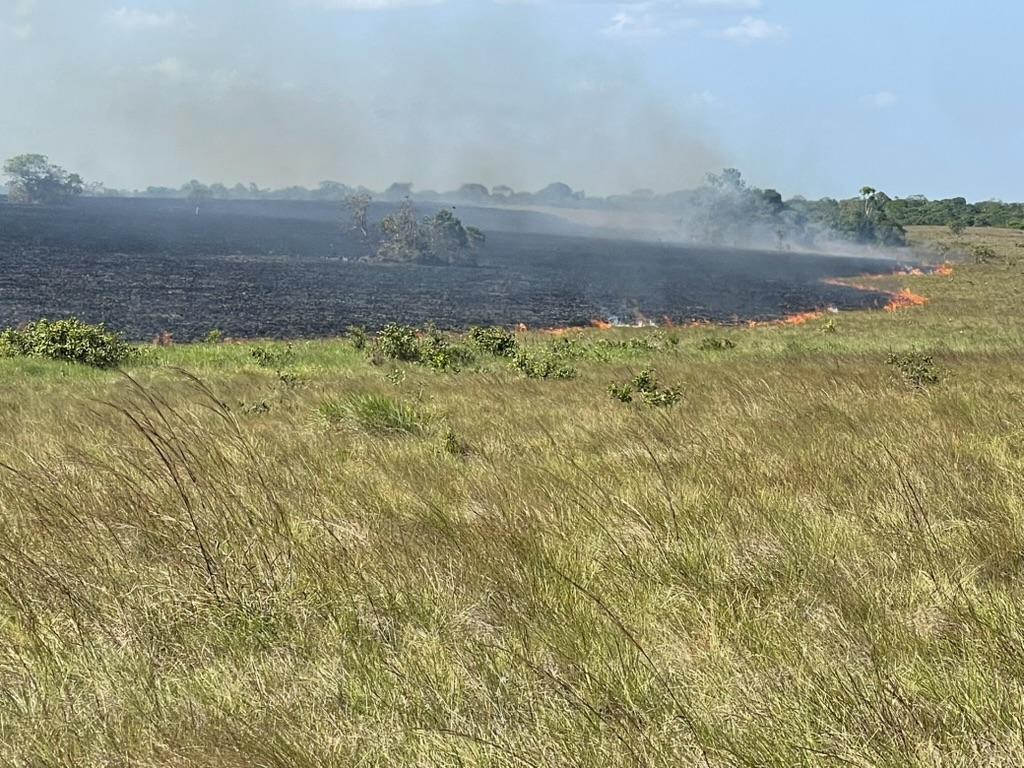
The weather was kind, and the terrain cooperative, allowing for smooth progress throughout the day. Along the way, we came across some controlled burns — sometimes intentional, to renew pastureland for cattle, and at times, the result of lightning strikes that spark spontaneous fires during storm season.
By late afternoon, we reached Cumaribo, returning to civilization and its small but welcome luxuries: air conditioning, proper beds, showers, and the comforts we had learned to live without — but greatly appreciated upon returning.
Day 10 — Back to civilization
For the first time in days, we refueled at a proper gas station — with modern pumps, no more bottles or buckets. Signs of civilization gradually reappeared: stable electricity, marked roads, and finally, paved asphalt.
Our day ended in Puerto Gaitán, where a well-equipped hotel welcomed us back with full modern comforts. The dusty, bumpy paths of the Vichada were now behind us. The 21st century had officially returned.
Day 11 — Back to reality
The final stage took us toward Bogotá. With time on our side, we made a stop at the Villavicencio Zoo, where we had the chance to observe some of the wildlife that had remained hidden from us during our ride.
A final llanero-style lunch closed the day, before climbing the eastern mountains back into Bogotá, carefully avoiding the city’s usual heavy traffic.
That evening, a celebratory farewell dinner sealed the adventure: everyone safe, happy, and filled with unforgettable memories. This is Colombia. This is the Llanos. And these are its people — capable of delivering authentic, deep, and unique adventures.
Once again, to my friends: a big hug, and you are always welcome back!
Thank you for trusting us.